
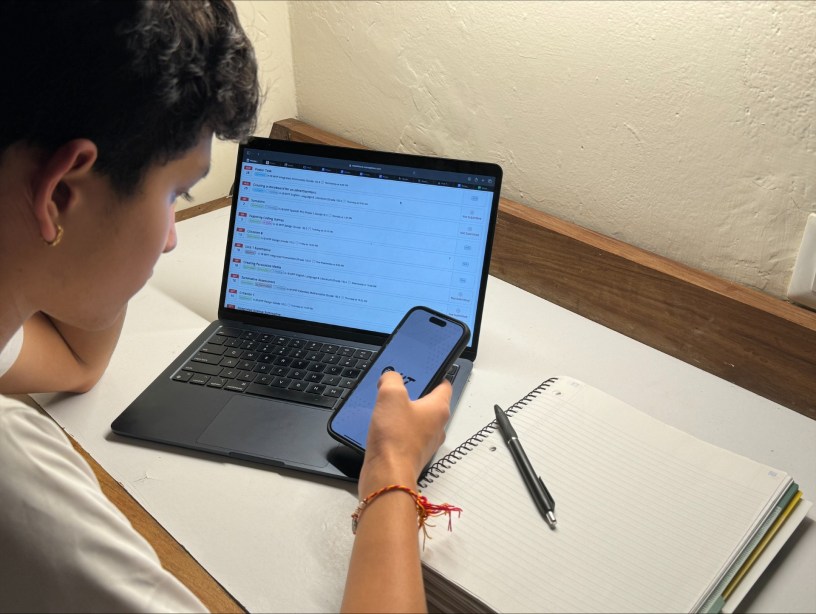
We have all found ourselves promising to finish a task tomorrow, only to find that tomorrow just never arrives, right? Or, saying something like “If I studied earlier, I would have enjoyed doing the work and my life would have been so much easier” said one anonymous Grade 10 student. Simply put, it’s procrastination. For some, it can be doing your work one day before the deadline, but for others, it can also be not working on something due three months from now. I see procrastination as a habit of delaying important tasks, in favor of more immediate and less significant activities. One interviewee described it as a “default mode where your brain’s instinct is to prioritize fun over work.”
Picture this: you have a summative due in two weeks, but instead of starting it now, you decide to binge-watch your favorite Netflix show. As the thought of having to sit down and research feels challenging compared to the instant entertainment we’ll get by watching Netflix, many of us opt to watch Netflix. So you put off your work telling yourself that you’ll start tomorrow. But, the cycle repeats, and now, the deadline is in six hours.
Now, let’s talk about Dopamine. It is a neurotransmitter that plays a role in our brain’s reward system, which influences motivation and pleasure. When we engage in activities that provide instant gratification, such as binge-watching Netflix or scrolling through social media, we receive a quick dopamine boost. It’s a concept that connects deeply with procrastination, often because the tasks we procrastinate on require effort, concentration, and willpower, which don’t provide the same immediate hit of dopamine.
Studies also show that 75% of college students consider themselves to be procrastinators and about 88% of them tend to procrastinate for at least an hour a day. It is also proven that procrastination is more of an issue than alcoholism and substance abuse (Todorov). So, what do people usually do when they procrastinate? The answer is varied for every individual. Some might end up playing video games for an extra hour, chatting, or even organizing. Others might scroll endlessly on social media feeds.
Procrastinating with activities like scrolling through reels or binge-watching videos impacts our productivity and overall success. One reason for this is that reels are designed to be highly engaging and addictive with attractive visuals, trending content, and even psychological triggers that keep the viewers hooked onto their screens. The quick hit of dopamine we get from consuming this content provides temporary pleasure and distraction from the stress of tackling our responsibilities.
When I asked a friend who happens to be a procrastinator what goes on her mind while procrastinating, she said “I feel like my brain doesn’t want to work until the deadline is fast approaching. I know I should start tasks weeks in advance, but my brain just doesn’t seem to gather the effort to come up with ideas or motivation until the deadline is the next day. It’s become a familiar pattern because I’ve never actively tried to overcome it.”
One example of this for her was when she had a documentary summative assignment due on the night of her advisory night. Everyone else had already left, leaving just her and her friend struggling to finish editing the video. She remembered having a complete mental breakdown, feeling overwhelmed by the pressure to finish on time. Despite utilizing every single moment of free time that day to work on the task, the stress and anxiety of leaving it until the last minute proved to be detrimental to her mental and emotional well-being.
The instance above highlights the impact that procrastination can have on both mental well-being and the quality of work produced. From the interviews I conducted, I understand that it is not the best feeling to constantly have that deadline over your head, knowing that you could have started earlier and avoided the stress altogether. By acknowledging the impact of our actions on our well-being and productivity, we can open up a path for meaningful change, one that is filled with productive high school years.
Priyanshi is co-editor of the Woodstocker
Image by Vivaan Anand and Aarav Sutariya
 thewoodstocker.com