
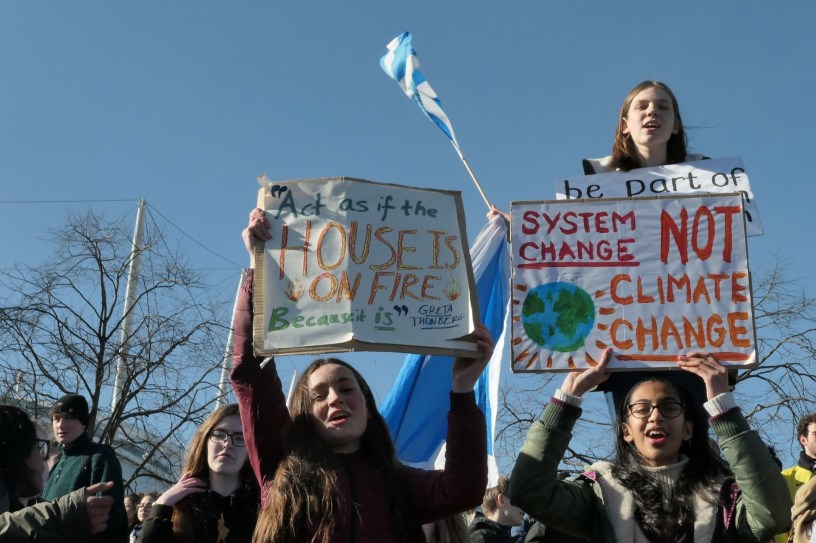
Amid rising sea levels and intensifying storms, it’s not just the planet that suffers—women, particularly in developing nations, bear the brunt of climate change. Although the greatest concerns of climate change include pictures of melting glaciers and increases in sea levels, there is a vital factor which still remains unaddressed. Why are women disproportionately affected? Surprisingly, there are links between feminism and climate change and how gender equality can become the driving force for saving our planet.
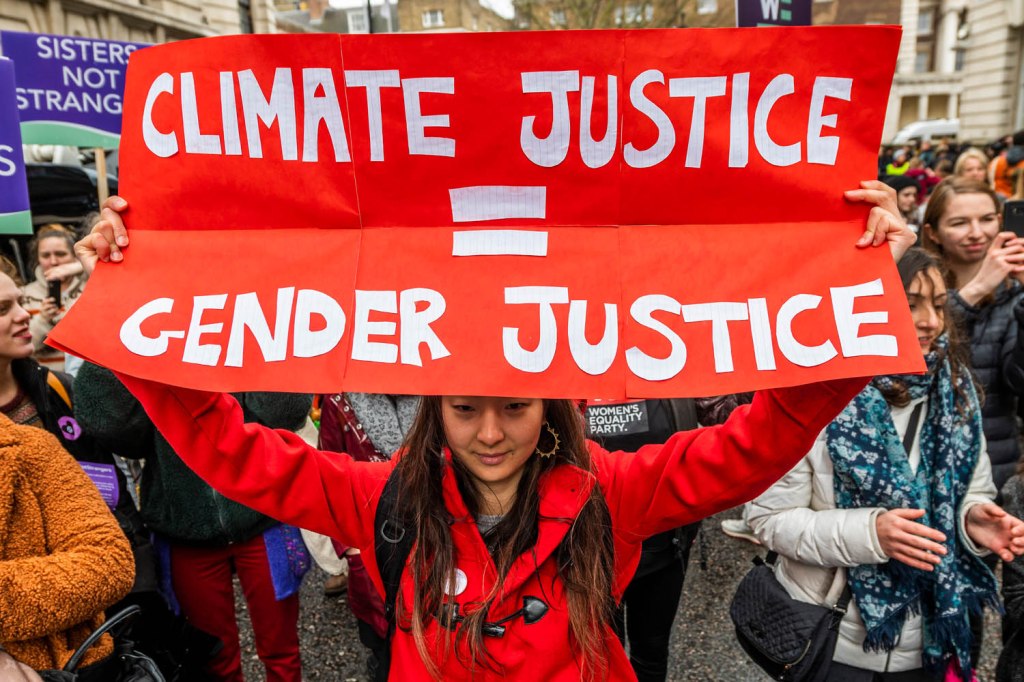
Women in America are still 35 per cent more likely than men to be poor. Due to societal norms and institutionalized inequalities against women, the effects of climate change are exacerbated for women due to a lack of economic and social stability. Hence. there is no denying that globally women are extremely affected by climate change, especially those in developing nations.
In urban areas, 40 per cent of the poorest households are headed by women. According to UNDP, In many regions, women are responsible for securing food, water, and energy for their families. It is evident that people who are already most vulnerable and marginalized will also experience the greatest impacts. For those living under poverty conditions, natural disasters are extremely harmful to their economic status and living conditions. The last people to receive resources would be the ones who are most disadvantaged; especially women. Additionally, when one brings up the consequences of climate change, such as pollution, the privileged men can afford air purifiers and take a trip outside the city to escape the air but the women who are barely surviving cannot stop their work and daily wage being earned no matter how adverse the circumstances are It is imperative to consider the power imbalances and institutionalized patriarchy which exists in the system. Access to education and employment opportunities, unpaid care, and gender based violence further pushes women down in their own fight; further disadvantaged them.
But this is not about women being victims, It is important to remember how global change movements are often spearheaded by women and how they are often the agents of change. A study by the International Union for Conservation of Nature (IUCN) found that approximately 70% of environmental defenders worldwide are women. Across the globe, women are taking various initiatives to combat climate change and build adaptable communities. In Andhra Pradesh, India, female farmers are practicing climate-resilient farming by switching back to traditional agricultural methods and it is expected that six million farmers and two million landless farm workers in Andhra Pradesh to be regenerating the soil by 2031, rejecting chemical fertilizers & pesticides, and using local seeds. This is a great example to portray how involving women in decision making and policy change can be strengthened, especially making sure that such practices benefit women.
We, high school students, have the power to make a difference. Through advocating for women’s rights and supporting women lead environmental initiatives, the world can become more sustainable, just, and equitable. Climate change is a global issue and seems vast and honestly impossible to solve in our lifetimes, but the solutions start from your, from supporting, advocating, on various levels. When supporting women and uplifting them economically and socially, it will not only increase innovation and advocacy but also help empower women’s environmental initiatives.
 thewoodstocker.com
[like] Craig Cook reacted to your message:
LikeLike