
What if the purpose of life isn’t just about finding your passion or achieving your dreams?
In a world that constantly pushes us to define ourselves by our ambitions, could we be missing something greater along the way? As we chase goals and passions, are we neglecting the simple, everyday moments that make life worth living?
Released in 2020 by Pixar, Soul is an animated movie that goes beyond its family-friendly appeal to deliver a deep exploration of human nature, purpose, and what it means to truly live. Directed by Pete Docter, the film tells the story of Joe Gardner, a middle-school music teacher with dreams of becoming a professional jazz musician. After landing what he believes is his “big break”, an accident sends Joe’s soul to the ‘Great Before’, In a series of events, Joe meets a cynical, unborn soul named 22, and they go on a journey that changes Joe’s perception of passion, purpose, and the true meaning of life itself.
At the heart of Soul is Joe’s pursuit of his lifelong dream: playing jazz professionally. After a series of failed gigs and missed opportunities, he finally gets his chance when he’s invited to perform with renowned jazz musician Dorothea Williams. However, on the day of the performance, Joe falls into a manhole, his soul leaving his body and entering the ethereal plane of the afterlife.

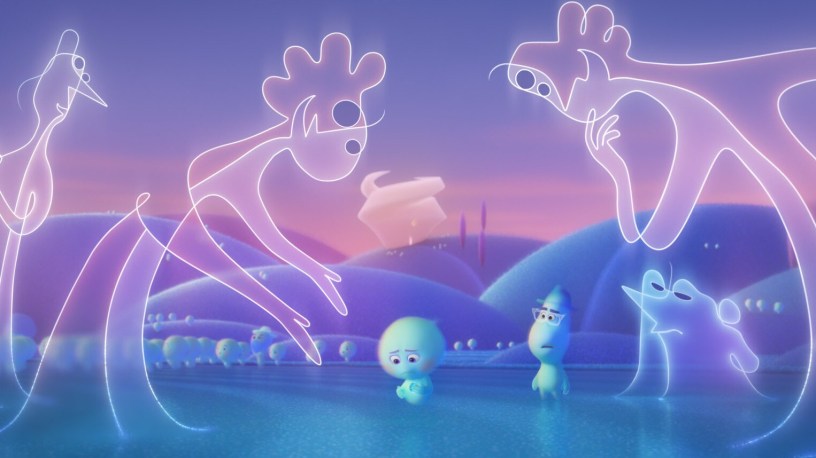
Instead of moving toward ‘The Great Beyond’, he ends up in ‘The Great Before’, where new souls develop their “personalities” before heading to Earth. Desperate to return to his life, Joe meets 22, a soul who has been stuck in the Great Before for centuries, uninterested in living. Through a series of events, they both end up on Earth, with Joe’s soul accidentally inhabiting the body of a cat and 22 in Joe’s body. As 22 experiences life for the first time, they begin to appreciate its small, seemingly insignificant moments, while Joe, focused on his performance, is blind to the beauty around him.
The movie focuses on Joe’s realization that life is not just about pursuing one’s passion but finding joy in everyday moments, the wind rustling through the trees, the taste of a delicious meal, or a simple conversation with a friend. It’s a powerful message that goes against the societal notion of purpose.

As humans, why is passion so important to us? For this, we need to understand how our brains process happiness and fulfillment. From a biological standpoint, human beings are wired to seek pleasure and avoid pain; this is where neurotransmitters like dopamine and serotonin work. Passion and purpose trigger dopamine releases that make us feel fulfilled. However, these bursts are short, leading to a cycle of chasing high after high.
In the movie, Joe’s pursuit of his passion for jazz aligns with this dopamine-driven reward system. He expects that his big break will bring him lasting happiness. However, after finally achieving his goal and playing with Dorothea Williams, Joe feels strangely unfulfilled, questioning if his passion was all there was to life. This realization is shown in the story Dorothea shares with him:
“I heard this story about a fish. He swims up to this older fish and says, “I’m trying to find this thing they call the ocean.” “The ocean?” says the older fish. “That’s what you’re in right now.” “This?” says the young fish. “This is water.”
This reflects a broader truth, while achievements can boost our mood, long-term happiness comes from a mix of purpose and the ability to savor everyday experiences. The small moments of joy that 22 begins to appreciate on Earth, like tasting pizza or walking in the park, are more aligned with serotonin, the neurotransmitter that controls our contentment and well-being. In essence, Soul shows that true fulfillment is not just about achieving lofty goals but about enjoying the present.
Soul also asks the core question, “ What gives life meaning?” “Is purpose something we are born with, or is it something we find? “. The movie shows that while passion can give us direction, it does not, and should not, define our entire existence. Joe’s character initially believes that his purpose is to become a successful jazz musician. However, through the movie, his purpose becomes far more complex and cannot be reduced to a passion; rather, the idea of living life to “live”.
This idea aligns with existentialist philosophy, especially the works of Jean-Paul Sartre, who believed that existence goes beyond essence. The idea that we are not born with a pre-determined purpose. It is up to each person to create their own meaning. Joe’s realization that life is more about small, meaningful, beautiful moments shows that “purpose” is found in the sum of each experience, not just in achieving a specific goal.
We live in a society that places pressure on kids to find their “calling”; it’s easy to become fixated on a specific dream, especially at the expense of other parts of life. Whether it’s sports, academics, or the arts, we become so consumed by passion that we forget to enjoy life along the way.

This is a message to the high-achieving students who tie their self-worth to success in studies. Life is more than just your passion. Soul reminds us that life is not just about reaching the finish line, it’s about enjoying the race. Although dreams are important, they should never be at the cost of experiencing the world, whether that’s spending time with friends and family, appreciating nature, or finding joy in everyday activities.
Passion is part of life, but it is not life itself. True happiness comes from loving life as a whole, from the highs of accomplishment to the quiet moments of joy. As kids chasing our dreams, it’s important to remember that success is not just about what you achieve but also about how much you love the journey along the way.
Trishana Panchagatti is a editor-in-chief in Woodstocker
All Photos: © 2020 Disney/Pixar. All Rights Reserved.
 thewoodstocker.com