
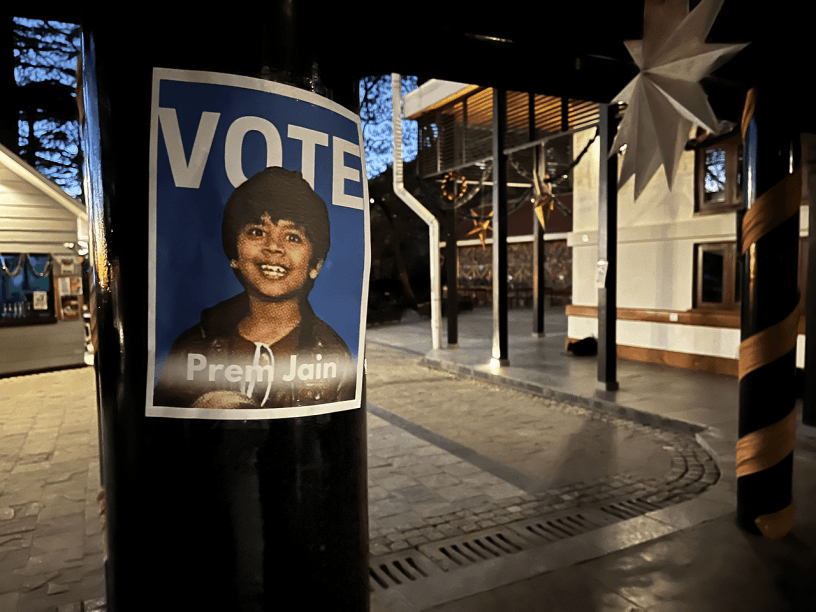
From a 17-year-old who wants to create the greatest one.
High School Student Government is the most underrated form of democracy and civic education, and for that reason, it must be strong. Broadly speaking, the fundamental problem with political and civics education today is that it is taught as if it were history: detached from experience, big-picture, and a memorization of facts regarding institutions that seem uninvolved, irrelevant to the day-to-day, and unchangeable by the individual. The message this sends to the next generation of citizens is that these institutions are not meant for their involvement. But rather, that they are mere subjects of it. Not its arbiters. From an American perspective, this detaches the citizens of our republic from the core notion that their elected officials are meant to be representatives of “the consent of the governed”. This concern definitely applies across liberal democracies all over the world. This disconnect is great for the establishment politician, not the republic and it’s citizen.
I believe the most direct way to address this problem is by developing strong student governments that directly affect the lives of students in their day-to-day. That is because it adds real stakes to concepts that seem set apart from common life. My goal with this article is to justify this belief by articulating my thoughts on some of the problems of democratic government in this age, and how student government can help mitigate them.
Developing Nuanced Voters.
One of the greatest problems that I believe exists in democracies today is the chunking of voters into cultural blocs via party affiliation or labels like “conservative” or “liberal”. Today in America, if you’re a conservative who advocates for fiscal responsibility, many would automatically consider you someone who is against abortion and against gun control. If you’re a liberal who advocates for universal healthcare or strong public education, many would immediately jump to the conclusion that you support the inclusion of transgender women in female sports leagues and weak border security.
This lack of nuance is dangerous and makes populations particularly prone to being propagandized and forced to affiliate with unwanted ideas, to maintain association with other ideas they feel strongly about. This can stem from a desire not to be socially ostracized by their surrounding cultural bloc. Whether that be hyper-blue (yet increasingly yellow) Silicon Valley, or hard-red Oklahoma.
A Strong Student Government can help solve this.
When a student government has a real say in things like the events you partake in, your academic life, and the liberties you have (even at the relatively small scale of a school), it makes one put some nuanced thought into the decisions one makes at the ballot box. It also brings about a realization of the importance of local government, something the world needs now more than ever. Above all, when you personally know candidates and have class with them, you expect them to fulfill the mandate they were elected on. Whether that’s more free periods or better food in the cafeteria. This is especially true when they have real authority, and the voters hold leverage over them for future positions or ambitions. This makes the voter understand their power and influence better. When coupled with the more personal and intricate web of social relationships, the blind partisanship we see at the national level isn’t reflected.
Developing Nuanced Candidates.
From a candidate’s perspective, the desire to fulfill their mandate is also more personal for the same reasons. They want to succeed because their success directly affects those they see nearly everyday and know best for the most consequential years of their life. If they fail, the consequence is more socially dire, and if they succeed, the praise means more due to the fact that it comes from someone sitting next to them in Spanish class every Thursday. It also prepares people who want to go into any form of leadership( the most likely to run for student elections), for the realities of public expectations, perception, leverage, power dynamics, and so forth. Whether that’s in a parliament of legislators or managing a retail store with 12 employees. (Please note that this paragraph is the one most rooted in my own beliefs, feelings, and experiences.)
For any of what I said to apply, real authority given to the elected representatives is crucial. Because when real authority is given, real results are expected. Powerless, ceremonial, or teacher-appointed positions further the notions of detachment and political alienation that young people feel and see with the government today. I have seen the difference firsthand.

When I left my Silicon Valley public school district in the 3rd grade, I landed in the world of conformist CBSE schools, India’s primary national-level education board. Instead of elected Student-body Presidents, they had headboys and headgirls; candidates being selected by the personal opinion of a select set of teachers and administrators. In my lived experience, out of a pool of students with exceptional grades, only the ones who were the best at ingratiating themselves with the most influential teachers (and/or knew the right people) were allowed to run. The more attainable “Class Monitor” position was a glorified snitch, given their main role was to serve as a peer disciplinarian, and would fit perfectly in Dolores Umbridge’s Inquisitorial Squad. (Note that I’m aware that my experience isn’t universal, but it does speak to the reality a vast swath of students across India face.)
These sorts of student leaders also have a tendency to abuse their power more, due to a lack of accountability to their fellow students. Student leadership positions such as these further perpetuate the notions that make our democracies weak. Uninvolved with the people they represent, irrelevant to their day-to-day improvement, and unchangeable by the average individual student. I saw this pattern across three different schools in Nagpur, and to a much smaller extent, in the IGCSE school I attended in Goa.
This reality holds across a lot of private schools in the developing world, places where private schools are the only viable option for anything resembling a real education. If these schools had real student government with even the smallest ounce of authority (which could also merely come from the legitimacy of their election and role as representatives), the apathy students face, and the dismissal of their concerns would not persist. We can see how the flawed mindset this system that develops translates into the politics of the real world.
Understanding your Voice. And Dissent.
Everyone I’ve met in India knows Prime Minister Modi, yet I can count on my fingers the folks who know their local representative in Parliament or their MLA (local representative to the state government). This is despite the fact that their local representative has more say over solving their everyday issues. From fixing potholes to educational improvement in their neighborhood, that’s their local representative’s job. Not Narendra Modi’s.
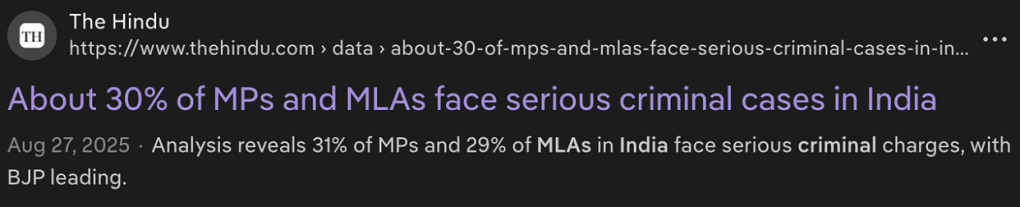
The average MLA in India is seen as more unassailable and can threaten the life of the citizen to a far higher degree than a high-level Minister.
Even in the United States, many decide who they’re going to vote for in Congress based on the endorsement of their preferred Presidents, not stances on issues faced locally. Though I have noticed that in India, especially, people are more apathetic to the state of their local politics.
At least in the U.S, citizens have a direct voice and play the role of arbiter in deciding who their candidates are through the primary system. Meanwhile, in India, the candidates given the party-line tickets are decided internally by party leadership. This is reflective of the cultural difference in nomination that begins in high school. In Indian systems, you’ve got to perpetually be subservient to authority, whether that’s the teachers or the party leadership. In American systems, yes, you need amicability with authority, but you also must keep the plurality of the people on your side–and make sure they feel you’re fighting for them. Essentially, in the American system, there is more room for dissent. Dissent is important in a functional democracy, and it is also important for a functional school environment.
A strong student government can teach you how to dissent.
Student Government allows for a medium for this dissent, and also teaches you the ways to express said dissent. Student government can teach you how to balance interests and convey your point of view to those who hold opposing opinions. Negotiating with the administration, a body of decision-makers objectively more powerful than you are, and encouraging them see your perspective and change policy accordingly, is one of the greatest skills and experiences one can have. The day I realized this was the day I walked into my school’s dining hall, and saw a separate counter for vegetarian students. My first-ever lobbying initiative had been a success.
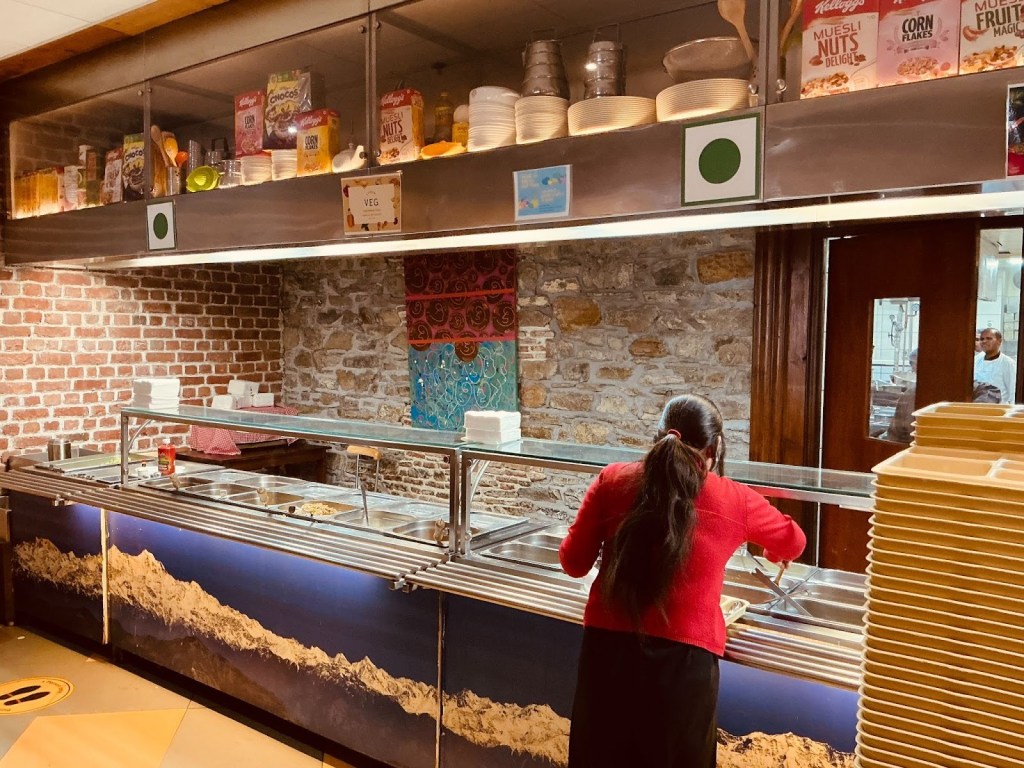
It was pretty hard to be a pure vegetarian at my school before that point, because of cross-contamination. Chicken spilled over into the vegetarian food all the time. Yet when I initially requested a separate counter for vegetarians, I was told it won’t happen. I refused to accept that. After I was told no by nearly everyone, I found an ally in my then-Vice Principal, and I worked with him and the food services department to create an exclusively vegetarian counter. First at school, then at the dorms. In the process, I found a mentor whom I could turn to for the next 3 years, and I also set the stage and precedent for my work in Student Council, and the connection I built with the wider student body.

That was in 8th Grade. I’m a junior now. In just a few months, I’ll be running for School President. The end goal that’s been building up in some capacity, since the day I decided to join Woodstock: the most American school I could find in India. One that held the same values I grew up adoring.
You saw the subtitle of this article. It’s time I address it.
In my initial years in India, I felt helpless. I saw a tremendous amount of injustice and wrongdoing, and could do nothing about it. Often, even when I tried to defend someone by standing up for them with my words, I realized I actually may have been making their situation worse. The anger a teacher could’ve had on me for standing up to them could be taken out on the kid, unwilling or unable to stand up for themselves. I hated that. I missed America very much. I missed being able to say “It’s a free country” whenever I had expressed an opinion that people around me disagreed with. I missed being told that I should always stand up for what I believed was right. I missed being told I could be whatever I want when I grow up, and actually being able to look at a path, built on strong institutions, to take me there.
It took me nearly half a decade to find a place where I had a semblance of those things I missed. That place was Woodstock School. For the first time in a long time, I could speak my mind without fear of harsh consequences, write the opinions I wanted in Humanities tests without being marked down (to a point), and most importantly, help solve the problems I saw.
A mechanism I identified to solve these problems was the Student Council. Yet both in Woodstock overall & its Student Council, I saw a backsliding in the values that made both those institutions great. I was encouraged not to be transparent. I was encouraged not to openly stand up for the values I was elected on and fundamentally stood for. And that frustrated me to my core.
I am sure I am not the only person in the world who’s been told to go against the whole point of a certain institution, to maintain the stability of the status quo. I cannot, and will not be satisfied with any institution I care about that isn’t all it can be. Whether that’s my country or the Student Council of my school.
Upon victory, I will have one year to build a model for the greatest student government possible. And I will strive to make it so.
Because what’s even the point of trying if you aren’t going all the way?
— Prem C. Jain
This article was written while I was in the midst of campaigning for my friend Monty to be my successor in Student Council.
 thewoodstocker.com
Fire stuff #slay 🙌🏼🔥
LikeLiked by 1 person